

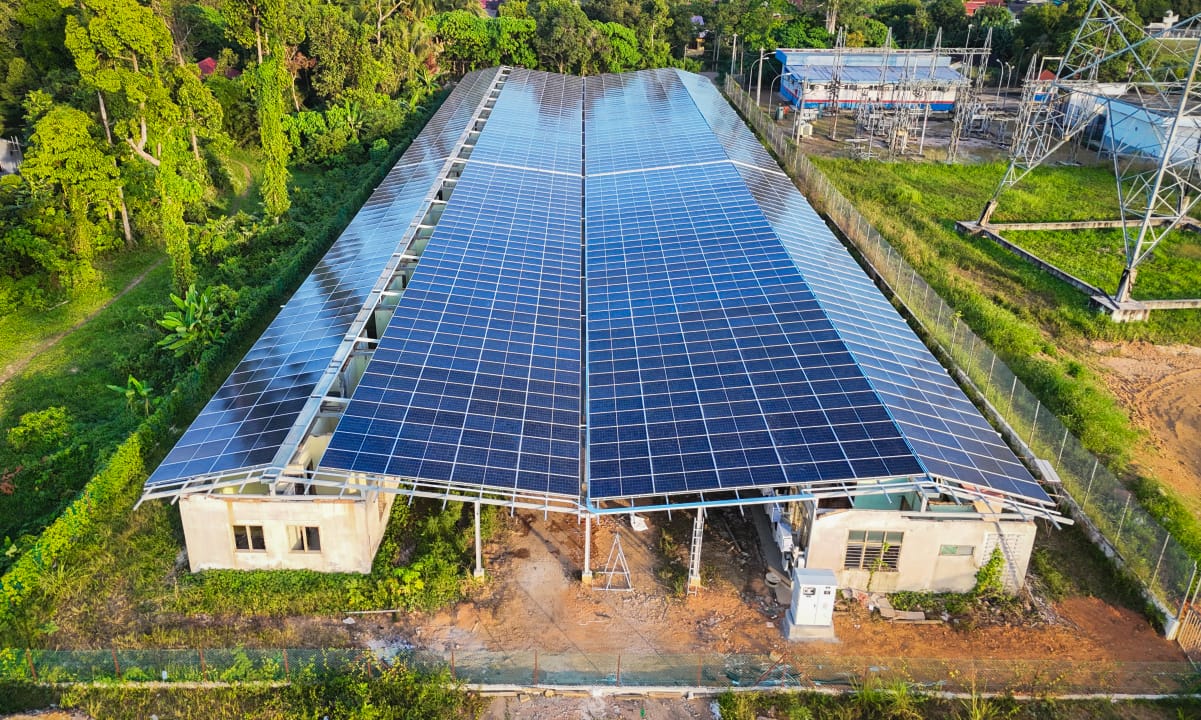
Solar Accelerated Transition Action Programme (Solar ATAP) is Malaysia’s new rooftop solar initiative, effective from 1 January 2026, designed to support self-generated solar energy use while still allowing excess to earn bill credits based on System Marginal Price (SMP). This makes solar more flexible and accessible for organisations.
For commercial, industrial, and government entities, rising electricity costs and ESG commitments make Solar ATAP a timely consideration. It aligns energy strategy with renewable goals without relying on quota-limited schemes like legacy NEM.
For more on how Solar ATAP works, click here: Solar ATAP Malaysia: How It Works for Businesses.
Solar ATAP’s core benefit is reducing net energy costs by using on-site solar generation first. Under the programme:
For businesses with significant daytime load (like offices, shops, and factories), this translates to real bill savings and more predictable energy expenses. As rates climb, self-generated solar power becomes a hedge against volatility.
Solar ATAP allows rooftop systems sized up to 100% of Maximum Demand for non-residential users, encouraging proper design that matches actual consumption patterns.
Well-sized systems:
Compared to legacy export schemes that encouraged oversizing for credits, ATAP’s structure rewards disciplined energy use and accurate engineering.
For a detailed breakdown, see Solar ATAP vs NEM.
Unlike older quota-based programmes such as NEM 3.0, which had limited allocations and fixed-offset rules, Solar ATAP is designed without quota limits and offers a more stable framework.
This allows organisations to plan energy investments with:
This stability is crucial for budgeting and board-level investment decisions.
Solar ATAP supports broader clean energy targets, such as Malaysia’s aim for 70% renewable energy by 2050 under national frameworks.
Adopting solar through ATAP:
Compared with purely financial drivers, this strategic value resonates strongly with government entities and institutional clients.
While Solar ATAP focuses on self-generation and market-based credits, organisations can combine rooftop solar with Battery Energy Storage Systems (BESS) for:
This means higher solar value capture and greater operational resilience (more on this in upcoming articles).
Conclusion:
For commercial and government clients, Solar ATAP is more than just a rooftop solar initiative; it’s a structured step toward predictable energy cost reduction, strong alignment with renewable goals, and future-ready power strategy.
By sizing systems based on real demand, leveraging SMP credits effectively, and planning for long-term load profiles, businesses can lock in energy advantages that pay dividends over time, all while supporting Malaysia’s renewable transition.
Sources:


Blogpost
Solar Accelerated Transition Action Programme (Solar ATAP) is Malaysia’s new rooftop solar initiative, effective from 1 January 2026, designed to support self-generated solar energy use while still allowing excess to earn bill credits based on System Marginal Price (SMP). This makes solar more flexible and accessible for organisations.
For commercial, industrial, and government entities, rising electricity costs and ESG commitments make Solar ATAP a timely consideration. It aligns energy strategy with renewable goals without relying on quota-limited schemes like legacy NEM.
For more on how Solar ATAP works, click here: Solar ATAP Malaysia: How It Works for Businesses.
Solar ATAP’s core benefit is reducing net energy costs by using on-site solar generation first. Under the programme:
For businesses with significant daytime load (like offices, shops, and factories), this translates to real bill savings and more predictable energy expenses. As rates climb, self-generated solar power becomes a hedge against volatility.
Solar ATAP allows rooftop systems sized up to 100% of Maximum Demand for non-residential users, encouraging proper design that matches actual consumption patterns.
Well-sized systems:
Compared to legacy export schemes that encouraged oversizing for credits, ATAP’s structure rewards disciplined energy use and accurate engineering.
For a detailed breakdown, see Solar ATAP vs NEM.
Unlike older quota-based programmes such as NEM 3.0, which had limited allocations and fixed-offset rules, Solar ATAP is designed without quota limits and offers a more stable framework.
This allows organisations to plan energy investments with:
This stability is crucial for budgeting and board-level investment decisions.
Solar ATAP supports broader clean energy targets, such as Malaysia’s aim for 70% renewable energy by 2050 under national frameworks.
Adopting solar through ATAP:
Compared with purely financial drivers, this strategic value resonates strongly with government entities and institutional clients.
While Solar ATAP focuses on self-generation and market-based credits, organisations can combine rooftop solar with Battery Energy Storage Systems (BESS) for:
This means higher solar value capture and greater operational resilience (more on this in upcoming articles).
Conclusion:
For commercial and government clients, Solar ATAP is more than just a rooftop solar initiative; it’s a structured step toward predictable energy cost reduction, strong alignment with renewable goals, and future-ready power strategy.
By sizing systems based on real demand, leveraging SMP credits effectively, and planning for long-term load profiles, businesses can lock in energy advantages that pay dividends over time, all while supporting Malaysia’s renewable transition.
Sources:
Reach out to us

-01.png)


